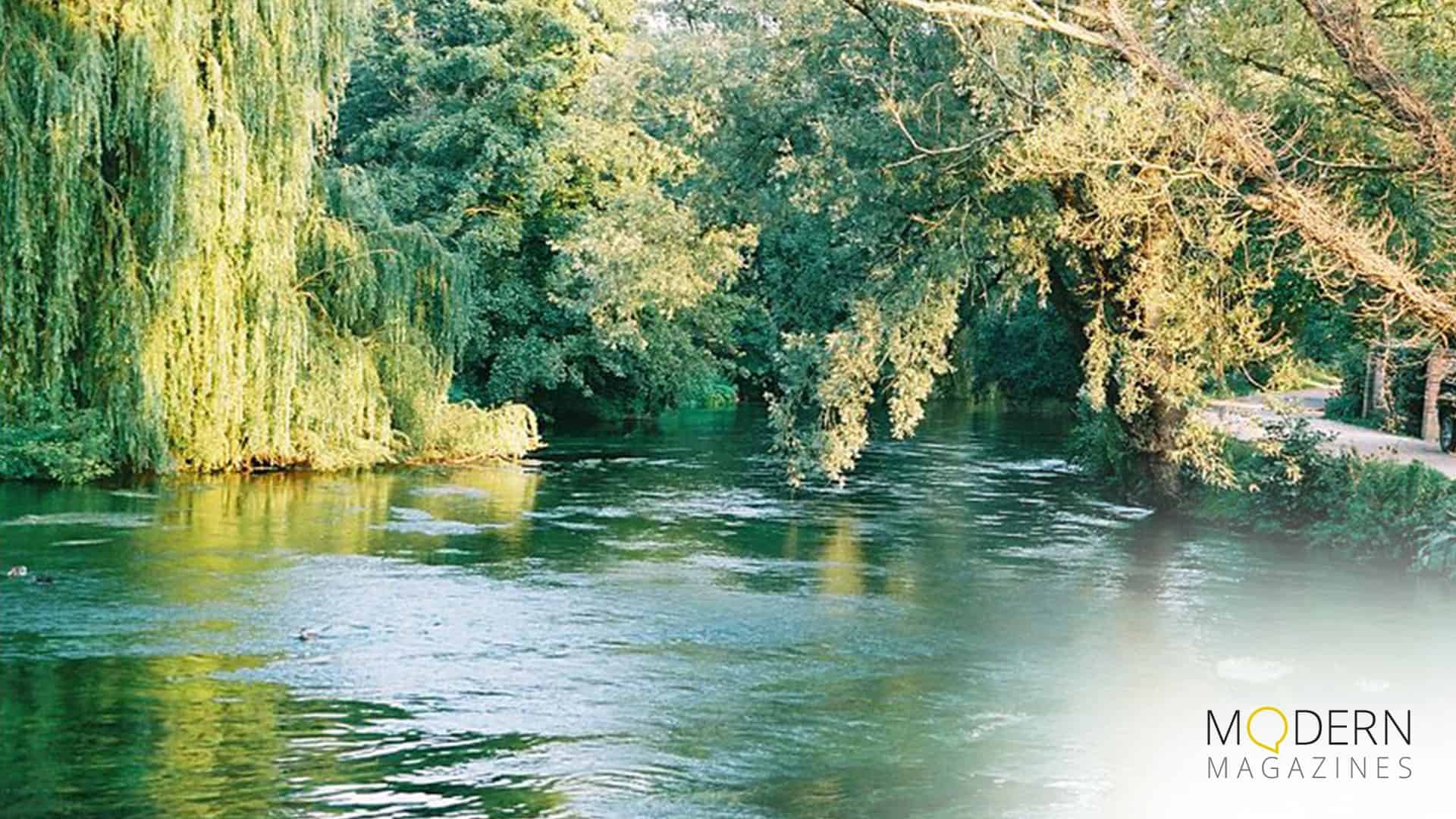
At first glance, the River Test might seem like just an ordinary tributary. One you could have learnt about in geography. On a map it is easy to identify – carving a 47 mile stretch of picturesque landscape as it courses through Hampshire from its source in Ashe to the mouth of Southampton Waters. But as we shall find out, its nature is far from ordinary.
The Test has always been a prominent feature in Romsey’s history. In fact, the intertwined story of our town and the chalk stream goes way back to Saxon England. Evidence to support this is sparse but fascinating. Some of you may remember back to December 2021, when Hampshire Chronicle reported the discovery of Saxon timbers in a section of riverbed that was drenched to make way for flood alleviation infrastructure. The logs were carbon dated (600-706 AD) and suspected of floating from an astriding structure further upstream, thus proving how the river was a valuable life line to early settlements. Before even then, it is likely Neolithic people to Romans relied on the river for survival too.
Fast forward to the 16th century and Hampshire’s economy is booming in trades that depend on rare high quality water: watercress, fisheries, farming of beef and lamb etc. Watermills were also abundant – the first machines prior to the Industrial Revolution to harness the river’s energy (the Domesday Book of 1086 records their earliest presence). Romsey was no exception, for the town had its own profitable relationship that made it an important trading town. Its status and wealth at the time was particularly built on tanning and woollen cloth – creating products that were sent to Southampton for export. Although the prosperity lasted only two centuries, the Test continues to play a part in the success of other sectors. Hospitality businesses; pubs, restaurants, hotels, for example, owe the river as a desirable destination for scenic dining experiences. And in recreational activities, the Test occasionally makes an appearance on recommended UK walking routes on TV and print – for those hardy enough to undertake the 44-mile long Testway Walk.
There is a spot earmarked for a lot of people when they go on strolls around Romsey and that is Sadlers Mill, just behind the Memorial Park – formerly known as the Salmon Leap. From here you can see along the causeway and under Middlebridge to glimpse Broadlands. People get easily drawn in by the soulfulness of the view that they are compelled to stop and take a moment. Enchanted no doubt by the whimsical vibe that reminds you of The Wind in the Willows, with the arching willow branches that drape over the flowing limpid water that is graced by Swans and families of Ducks and Moorhens – holding you with the soothing sound of running water and air of serenity. Under an azure sky, you are powerless to resist.
The purpose of a river however is more than just to power machines and inspire emotions. In the natural world a river can support a vast ecosystem for many species of freshwater life, and the Test is no different. Described as ‘one of the most species-rich lowland rivers in England’ and designated a Site of Special Scientific Interest (SSSI), the Test is a vital habitat to iconic species of animals and insects that are either endangered or unique to only the UK. Wildlife enthusiasts of Romsey’s two nature reserves – Fishlake Meadows and Tadburn Meadows Nature Reserve, will know this includes Otters, Ospreys, and Kingfishers, but other notable species include White-clawed crayfish, Water voles, Toads and Frogs, Dragonflies and Damselflies, Grass snakes and common lizards. Not forgetting of course the diverse range of fish that gave the Test its fame – The Angling Trust regards the Test as the birthplace of modern day fly fishing, and as ‘one of the finest Trout and Salmon rivers in Europe’.
So there we have it readers. London may have the Thames, Paris the Seine, Cairo the Nile and New York the Hudson. But Romsey has the The River Test. Though it may not be nearly as iconic, the Test nevertheless holds a world-class reputation for its history, scenery, and rare ecosystems. According to The Wildlife Trusts, there are ‘only 200 chalk rivers [known] globally, 85% of which are found in Southern England’. We certainly have a lot to thank for it, for as we can rationally propose: if there were no Test there would be no Romsey to speak of. No Romsey and no you and me!