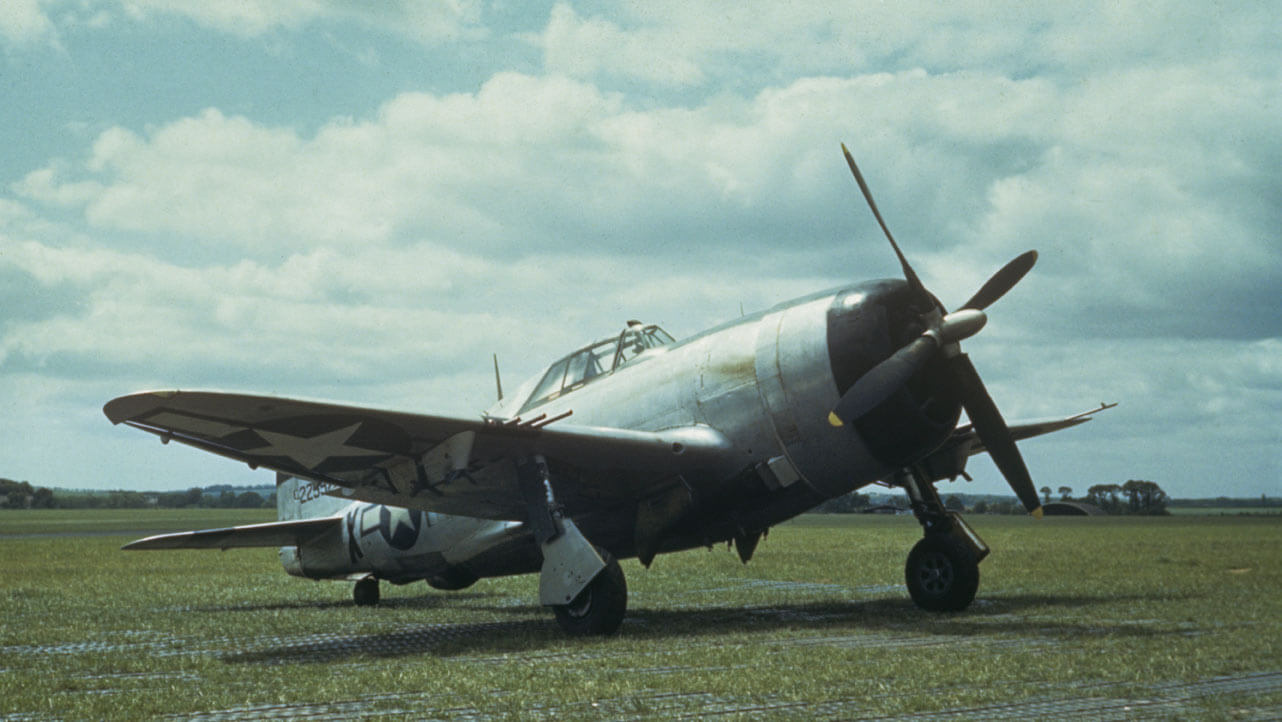
Visitors to Sopley Pick Your Own are more likely to associate the surrounding countryside with strawberries, fresh produce and peaceful summer days than with the drama of the Second World War. Yet beneath these tranquil fields lies the story of a wartime airfield that played a vital role in the preparations for D-Day.
In the months leading up to the Allied invasion of Normandy in June 1944, there was an urgent need for temporary airfields along Britain’s south coast. Known as Advanced Landing Grounds (ALGs), these airfields were rapidly constructed on farmland to support the invasion and the campaign that would follow across Europe. Four such airfields were built in the New Forest area: Bisterne, Lymington, Needs Oar Point and Winkton.
Construction of Winkton ALG began in September 1943 when an RAF Airfield Construction Squadron arrived on site. The work was completed by American forces during the spring of 1944. For security reasons, the United States Army Air Forces identified the airfield not by its location, but by the code name “Station 414”.
Like many temporary wartime airfields, Winkton was designed to be built quickly and removed just as easily. Its runways, taxiways and aircraft dispersal areas were formed from Sommerfeld matting and pierced steel planking laid directly over farmland. Most personnel lived in tents concealed among nearby trees, while a handful of blister hangars provided space for maintenance and storage.
By April 1944, the airfield had become home to around 1,000 American airmen and seventy-five P-47 Thunderbolt fighter aircraft from the USAAF Ninth Air Force’s 404th Fighter Group. Operating from Winkton from May 1944, the group’s three fighter squadrons carried out dive-bombing attacks, armed reconnaissance missions and bomber escort duties over occupied Europe.
On D-Day itself, 6 June 1944, aircraft from Winkton played their part in one of history’s most significant military operations. The 404th Fighter Group flew four patrols over the invasion fleet and landing beaches, providing vital protection from dawn until late evening. Their work continued in support of Allied troops throughout the following weeks.
The airfield’s operational life was brief. In early July 1944, the fighter group moved to a newly established airfield in Normandy, following the advancing Allied forces. Soon afterwards, Winkton ALG closed, and by August the land had returned to agricultural use.
Today, little remains to suggest that the fields once echoed with the sound of powerful fighter aircraft preparing for war. Yet the story of Winkton Airfield remains an important chapter in local history, reminding us that even the most peaceful corners of the New Forest played a crucial role in the success of D-Day and the liberation of Europe.
More information can be found at fonfa.co.uk, including details of our 2027 opening times.