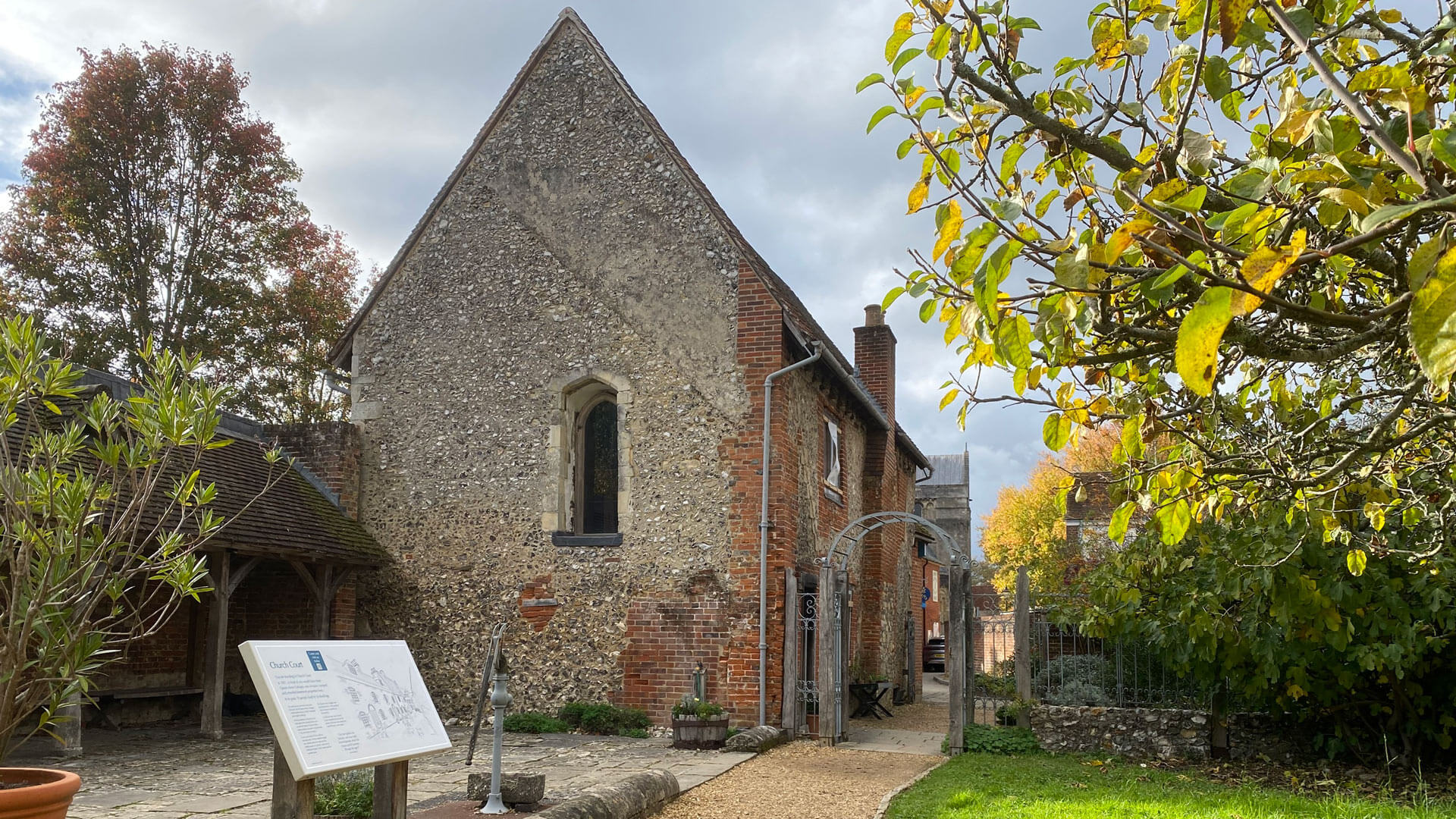
The restoration of the historic windows of King John’s House in Romsey has brought daylight into the medieval building for the first time since a catastrophic fire in 2025. Expert restorers Wessex Stained Glass have tackled the challenge of reconstructing and reinstating the Grade I-listed medieval hall’s historic windows, which were badly damaged by the fire.
This vital work, which is an early step in the painstaking restoration of the treasured building, is an important milestone in a journey which will eventually see King John’s House and Museum reopen as a community-focused museum telling the story of Romsey.
Restored windows
The building’s traditional leaded light windows were badly damaged by the blaze, with several blown out by the fire in February 2025. As a result, King John’s House has looked forlorn for over a year and a half, with temporary boards fitted over the broken panes to keep the elements out. Reinstating the windows was a priority not only to help keep temperature and humidity under control inside the building, but also to restore the building’s identity.
After carefully extracting the damaged window panels from their wooden frames, specialists David and Angela Bowman of Wessex Stained Glass took these important pieces of the building’s history back to their Dorset workshop for skilled repairs. As much of the surviving glass as possible was retained, with replacement period-correct cylinder glass fitted where required, along with new leading.
Following painstaking cleaning and conservation work to the frames, the restored window panels were refitted, transforming both the outward appearance and internal light levels of King John’s House. Meanwhile, the windows which had survived the blaze intact, including the former doorway at the eastern end of the medieval hall, were cleaned to remove their thick, sooty coating.
The windows are an important element of King John’s House, reflecting its varied and complex past. As the use of the building changed over the centuries, from what was believed to be a meeting hall for Romsey Abbey, to private residences, then workshops and eventually the town workhouse, the windows changed shape, size and position numerous times to suit the varying levels of natural light needed. Clues to these changes can still be seen today in the brickwork integrated into the flint and limestone structure.
Long-term future
With the physical work underway, plans are also being made to look towards the long-term future of the museum and heritage site, following the awarding of a grant to King John’s House and Museum by The National Lottery Heritage Fund. This grant of £175,650, including £58,650 in match funding, will fund KJH 2030: From Crisis to Confidence, a new project which will create a whole-site masterplan to transform the museum spaces and broaden audience engagement, creating a vibrant local museum for Romsey and ensuring its long-term viability and sustainability.
Although the restoration is expected to last until at least 2028, a centenary exhibition is planned for the museum for 2027, to mark the ‘discovery’ of King John’s House by former owner Mabel Moody and archaeologist Walter Andrew in 1927 and its recognition as a key part of Romsey’s history.
The King John’s House cafe at 13 Church Street, Romsey is open from Tuesdays to Saturdays, while our heritage gardens are open to visitors all year round. For more information and to donate to the restoration appeal, please visit www.kingjohnshouse.org.uk.