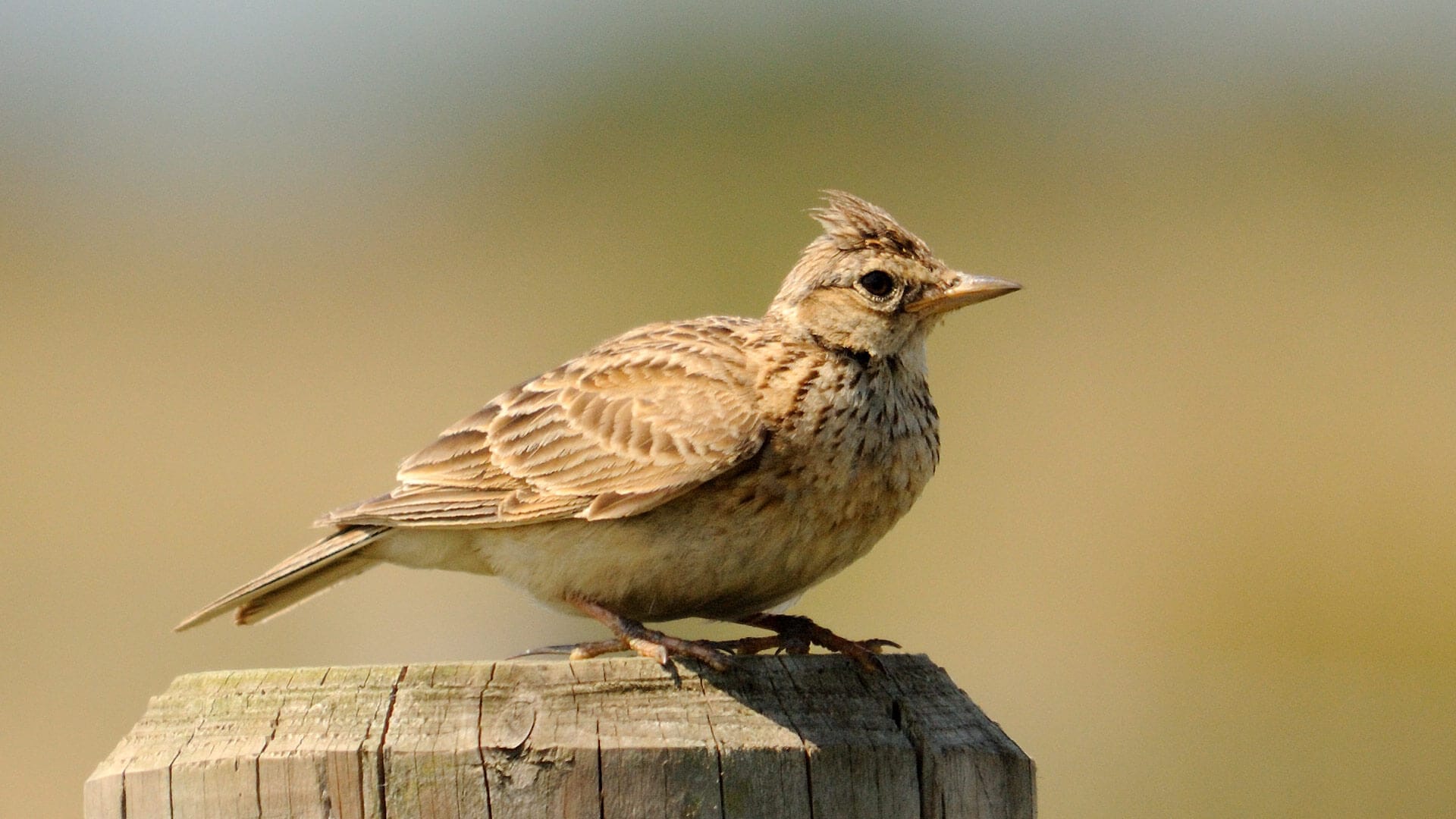
As winter fades and the countryside awakens, one of the most uplifting signs of spring is the song of the skylark. This small, streaky brown bird can often be heard long before it is seen, filling open fields and grasslands with a joyous, bubbling melody.
Skylarks (Alauda arvensis) are modest in appearance but extraordinary in behaviour – including their remarkable aerial song displays. Males rise high into the sky, sometimes hundreds of metres above the ground, singing continuously while hovering or slowly circling. These flights serve both to attract a mate and to mark a breeding area.
Skylarks are omnivorous, feeding mainly on seeds, grains, and small invertebrates. In spring and summer, insects such as beetles, caterpillars, and spiders become a key part of their diet, providing protein for growing chicks. This reliance on open farmland, grassland, and heathland means that habitat loss and intensive agriculture can have a major impact on skylark populations. Research shows 66% of ground-nesting birds in the UK are in decline, highlighting the importance of protecting these delicate species.
These small, plump birds are streaked brown and buff above, with pale underparts and a short crest that can be raised when the bird is alert. This colouring provides excellent camouflage among grasses, helping protect them from predators while nesting on the ground. Here, females build shallow nests hidden among grasses, laying three to four eggs. Chicks grow quickly and leave the nest within a couple of weeks, allowing some pairs to raise multiple broods during the season.
However, ground-nesting birds, such as skylarks, are particularly vulnerable to disturbance, for example, from dogs. Birds perceive dogs as predators, and when dogs roam freely, they can trample nests. They may also scare adults and cause the birds to abandon their chicks and nests, leaving eggs and chicks cold and unprotected.
Hampshire & Isle of Wight Wildlife Trust is advising dog owners to help by keeping pets on short leads, especially from March through July when birds are breeding. By following this guidance, dog owners play a crucial role in ensuring skylarks and other spring wildlife continue to thrive.
The Trust works with farmers, landowners, and communities to protect open grasslands and farmland, helping skylarks perform their iconic song flights for generations to come.
To support local wildlife and to help give nature a wilder future, please consider becoming a member of Hampshire & Isle of Wight Wildlife Trust. For more information about joining the Trust, visit: hiwwt.org.uk/join-today or call the membership team on 01489 774408.
Photo Credit Amy Lewis