The Precept – How Parish Councils are Funded
There are about 9,000 parish and town councils in England. Over 16 million people live in communities served by them. Parish Councils may be known by different titles. They could decide to call themselves a town council, village council, community council, neighbourhood council or, if it has city status, then a City Council. They all have the same powers and duties, whatever their title. Generally, town or city councils are larger and serve more people – but that is not always the case. Any parish council could decide to call itself a town council, and its role wouldn’t change.
Parish Councils are the third tier of local government. In Dorset, we have two first-tier councils, also called unitary. These are the Dorset Council (DC) and the Bournemouth, Christchurch and Poole Council (BCP). These were both created when the second tier of local government (district councils) in Dorset was disbanded on 1st April 2019. Dorset Council is the unitary council that St Leonards and St Ives Parish Council comes under.
The parish council is a corporate body and a legal entity and is accountable to its community. Its decisions are the responsibility of the whole body and are made collectively by a majority. Its business is administered by a Parish Clerk who is known as the Proper Officer. Their main role is to advise the council, to carry out the instructions of the council and ensure it remains lawful. The council also requires a Responsible Financial Officer (RFO). For St Leonards and St Ives Parish Council, the Parish Clerk is also the RFO. The aim of the parish council is primarily to serve the community. The population of the parish is about 7,500. Approximately half are over sixty years old.
It typically has sole or joint responsibilities for many issues, some of which are:
- Forested areas, including drainage ditches
- Recreation – play park, village greens, playing fields, lighting, signage
- Footpaths
- Buildings – village hall building complex, leases, maintenance, facilities management
- Car park
- Litter bins – dog waste bins
- Bus shelters
- Planning consultation
- Emergency planning
- The Council Precept
Councils charge a parish precept to fund the parish council and the activities they intend to undertake on behalf of the community. The precept is part of the Council Tax and is collected from local electors via their Council Tax payments.
How is it calculated?
The parish council identifies all the activities it will carry out in the next financial year. It then considers how much it will cost to carry out all those activities. This year, this will be done in October/November. A proposed budget is then created. It is discussed and approved by Councillors, and a precept request is sent to Dorset Council in January 2026. Last year, the Parish Council was given a precept of £108,773.00. It is the council’s aim to keep any increase in the precept to an absolute minimum. With the continual rise in utility costs, insurance, and general building and grounds maintenance costs, it will be a challenge for the council to achieve this.
The budget will include items like:
- Staffing – employment costs, training, travelling. We have two part-time staff.
- General administration – audit fees, telephone/broadband, postage, insurances, expenses, office equipment, IT support.
- Utility costs
- Recreation areas and grounds maintenance – bin emptying, grass cutting, forestry management, play park inspections and maintenance
- Facilities management – health and safety inspections, PAT testing, legionella, fire alarms, emergency lighting
- Grants and donations
- Subscriptions
- Advertising – website, noticeboards
- Capital expenditure – upgrading/improving existing facilities, delivering new works and facilities for the Parish and repairing or renewing existing facilities.
The Parish Council has received several income payments over the last few years as part of the Community Infrastructure Levy (CIL) from Dorset Council. The CIL is a charge that local authorities, such as Dorset Council, can set on building developments to raise funds to help pay for new infrastructure, facilities and local services.
The Parish Council has used CIL funding for several new projects, such as refurbishing the playpark, creating the community orchard and the new phone box.
The Parish Council is in the process of determining what new projects it can spend CIL funding on. We are always open to suggestions from residents on improvements to existing facilities and services or to providing new ones.
Contact the Parish Clerk on clerk@stleonardsparishcouncil.gov.uk or 01425 482727.
Neighbourhood Plan
The Parish Council are creating a Neighbourhood Plan and would like to hear your views on what you think is important in the parish. We have produced a questionnaire which is accessible on our website at www.stleonardsparishcouncil.gov.uk or paper copies from the One Stop or the red phone box by the Village Hall. Please drop completed paper copies into the Parish Office letterbox.
St Leonards and St Ives Village Hall
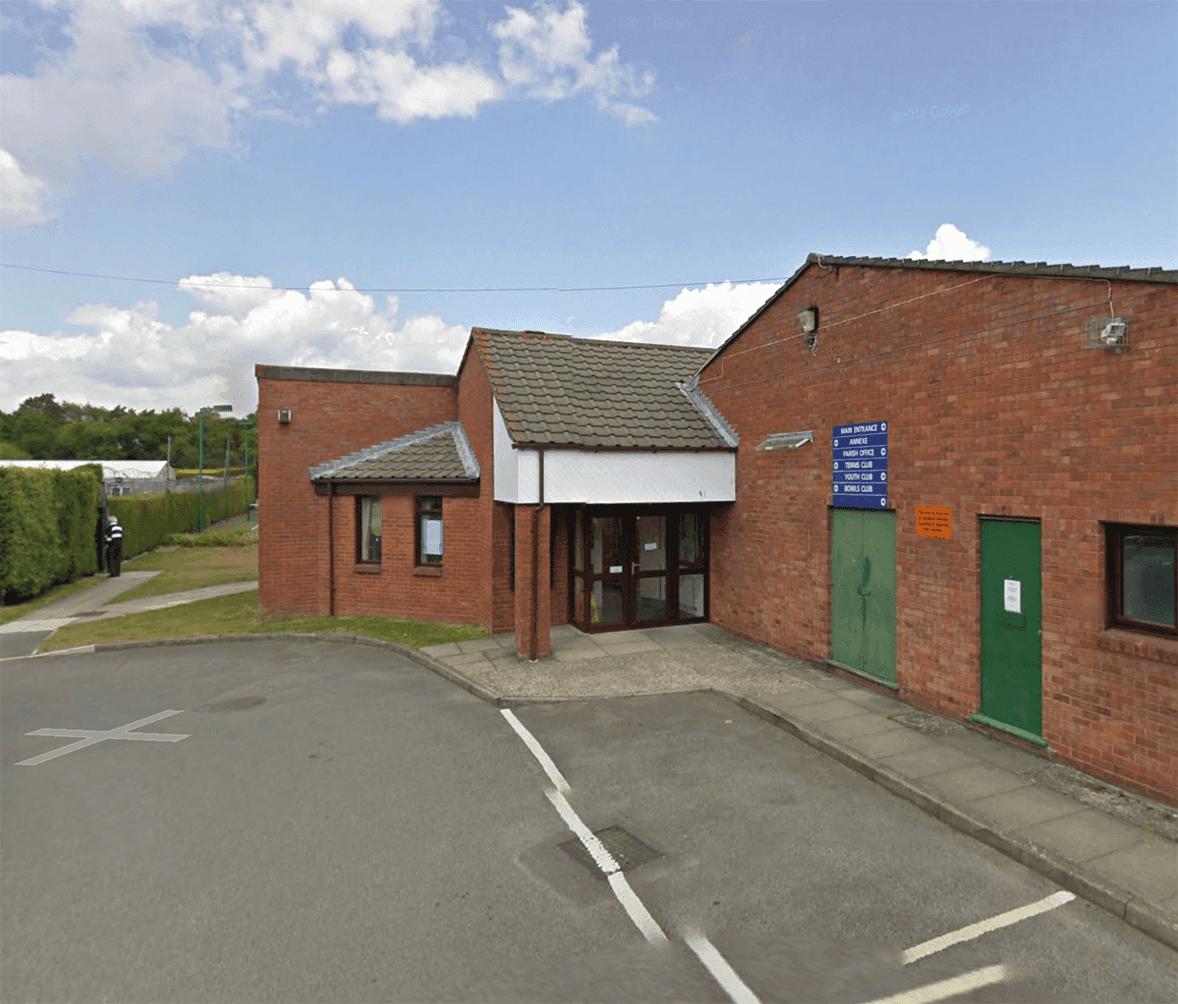
This parish has its own village hall, situated in Braeside Road by the red phone box. It has 3 different rooms available for hire.
The main hall holds 130 people seated or 100 seated at tables with a dance floor. For theatre-style events, the maximum capacity is 200 people, with a further 25 able to sit on the balcony. It has a stage which is perfect for revues, musicals, etc, with wings on both sides and a stage curtain.
Annexe holds 60 people seated at tables or 100 closely seated.
Russell Room has seating for 45 people and has tables available.
The annexe has its own kitchen, and the main hall and Russell Room have use of the large main kitchen. There is ample free parking.
For more information about bookings and room charges, please go to www.stleonardshall.org.uk or email our Administrator, Clementine, office@stleonardshall.com.